

Founded on partnership, building on 15+ years of local insight and experience to amplify the impact of our support for children and young people.
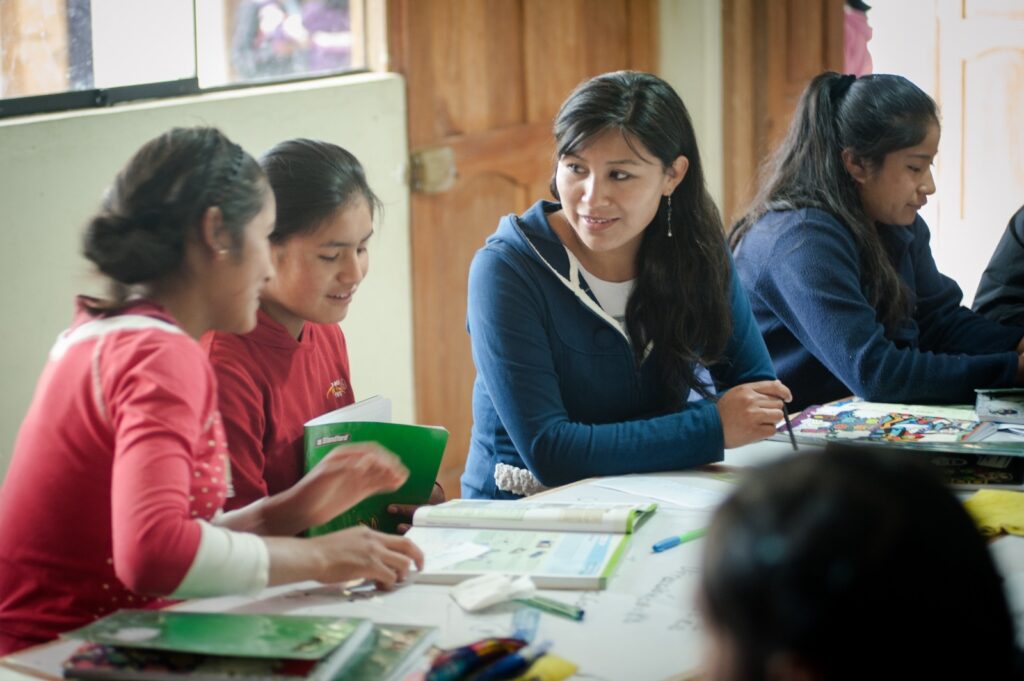
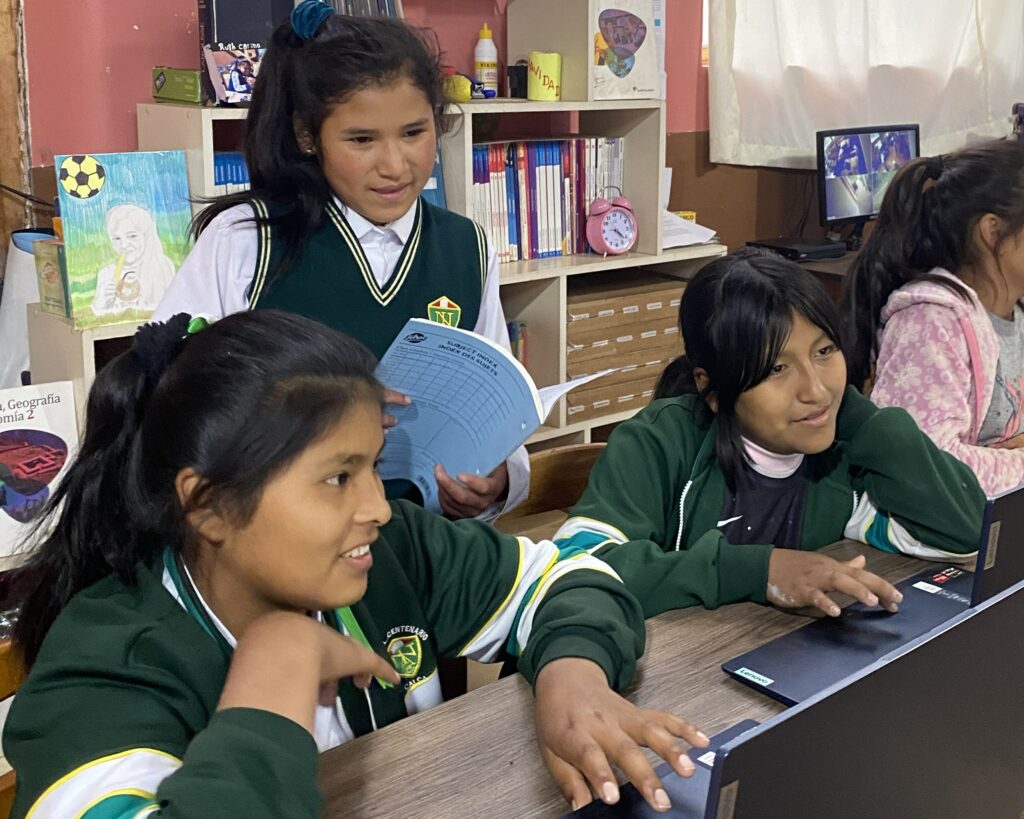
Working alongside young people in the Cusco region, Peru.
What drives our work alongside partners in the Cusco region.
A Latin America where all children and young people have equitable opportunity to access quality education, realise their potential, and build secure, fulfilling futures.
We work with a network of local partners in the Cusco region to enhance their capacity to deliver educational and personal development programmes for children and young people. Alongside direct support, our partnership model centres a shared commitment to develop organisational capacity to achieve greater long-term impact.
The barriers which prevent children and young people from accessing quality education and equal life opportunities are complex and systemic: the solution requires partnership and commitment to long-term impact.
Poverty, gender inequity, rural isolation and language barriers prevent many children and young people in Peru from accessing quality education and meaningful life opportunities.
Many grassroots organisations and NGOs in Peru face difficulties accessing funding opportunities, due to limited organisational capacity and the challenges of being locally registered.
We work with a network of local partners in the Cusco region to enhance their capacity to deliver educational and personal development programmes, supporting both learning and pastoral pathways to help young people pursue their goals.
Our partnership model supports organisations to improve their delivery mechanisms and develop in key skill areas to strengthen their resilience and effectiveness.
Children and young people facing structural barriers are supported to achieve improved educational, personal and professional outcomes. Local partner organisations build increased capacity and sustainability, enabling them to deliver community impact that improves wellbeing, prosperity and resilience.
The combination of directly supporting young people while enhancing partner delivery at the same time amplifies the impact of our partnership.
LAFF operates in Cusco, Peru, working with local partners to increase children and young people’s access to quality education and equal life opportunities. Socio-economic factors such as household income, location, gender and first language all impact educational outcomes.
Rural population in the Cusco region*
First language is Quechua*
Rural literacy rate*
Homes in the Cusco region have no internet access**
* According to the 2017 national census in Peru, for the Department of Cusco. ** According to the National Center for Strategic Planning (Centro Nacional de Planeamiento Estratégico) of Peru, 2024.
Socio-economic factors such as household income, household location (urban or rural), gender and first language have an impact on children and young people’s educational outcomes. The Young Lives longitudinal study found that participants showed lower educational outcomes by age 22 when they were ‘born in poorer households, in rural areas, with less-educated mothers, or from an Indigenous background’ (1, emphasis from LAFF).
The Covid-19 pandemic brought to light the ‘brecha digital’ — the digital divide between households with and without internet access. In 2022, 40% of homes in the Cusco region had access to the internet (2).
The Young Lives study also found that teenage pregnancy was strongly associated with lower secondary school completion (1). In the Cusco region in 2022, 10.3% of girls aged 15 to 19 had been pregnant at some point, and 8.9% were already mothers (3).
In this context, recognising the importance of quality and equity in education, LAFF works with partners to support their educational and personal development programmes for children and young people who may face systemic barriers.
References
1. Young Lives (2025). Education and Learning: Preliminary Findings from the 2023–24 Young Lives Survey (Round 7): Peru. Available at: younglives.org.uk [Accessed 24 December 2025].
2. CEPLAN (2022). Reducción de la brecha digital. Available at: observatorio.ceplan.gob.pe [Accessed 24 December 2025].
3. Instituto Nacional de Estadística e Informática (2023). Cusco: Encuesta Demográfica y de Salud Familiar. Available at: proyectos.inei.gob.pe [Accessed 24 December 2025].
LAFF’s activities in Peru began in 2007, when our founder Sarah Oakes formed our first partnership with Azul Wasi, fundraising and providing support to enable the establishment of a safe home environment for young and teenage boys experiencing homelessness. Since then, we have maintained our commitment to working with local partners with an active relationship on the ground and leveraging support from a community of individuals, organisations, and trusts and foundations across the world.
Our partners are independent organisations, working in specific focus areas with their own strategies and models. The common thread uniting the LAFF network is work with children and young people, where LAFF provides additional support to enable access to quality education and personal development opportunities.
In the last 5 years, LAFF has collaborated with 4 partners, averaging 107 young people per year, many of whom we have supported for 2, 3, or even 5 consecutive years, amounting to 538 total years of support.
Maintaining the importance of partner organisational sustainability to amplify the impact of our investment in community building, educational partnerships over the long-term, we have a stream of work dedicated to partner organisational development and capacity building.
LAFF’s organisational support has enabled partners to improve their programme delivery and evaluation, diversify their income streams, expand their operational footprint and forge long-term international partnerships of their own with experts and fundraisers.
LAFF is led by permanent staff in Cusco, supported by a network of volunteers on-site and remote, and backed by a committed board of trustees.

People Trustee
LinkedInChiara’s journey with LAFF started in 2015, when she volunteered as the Vocational Training and Career Guidance Coordinator before leading LAFF as Programme Manager in 2015/16. As a trustee, Chiara leads on our people strategies, ensuring that LAFF attracts talented, committed individuals and that they are supported by and contribute to our organisational culture.

Communications Trustee
LinkedInClarice formed part of the LAFF team in 2020-21, first as Communications Coordinator and then as Programmes Coordinator. As a trustee, she brings her background in communications to lead strategy around brand, impact communication and campaign design.

Data and Systems Trustee
Dawid brings a technical background in data management and reporting, implementing processes and designing tools so that our data is well-structured to yield insights, backed by robust security.

Fundraising Trustee
LinkedInDhaksha joined LAFF as fundraising coordinator in 2024, later joining the board as Fundraising Trustee. Dhaksha leads LAFF’s strategy to secure grants, build our support base and diversify our fundraising portfolio.

Partnerships Trustee
Macarena brought her background in Sociology and Public Policy to the role of Programme Manager in 2020, leading LAFF and supporting our partners through a moment of extreme challenge during the Covid-19 pandemic. As a trustee, Macarena leads on our partnership strategy and has been pivotal in transitioning our model to deliver partnerships with greater impact.

Finance Trustee
LinkedInPatricia leads on LAFF’s financial strategy and planning, ensuring that our finances are sustainable and set up to achieve our organisational goals

Finance Trustee
Pedro leads on LAFF’s accounting and compliance, key to ensuring we are financially secure, the appropriate financial controls are in place, and our reporting is robust.